



Costa Rica Today
For many years Costa Rica has been called the Switzerland of Latin America because of its natural beauty, its stable democracy, the quality of life of its citizens, and its lack of a military. The country has become a magnet for tourism as well as a desirable destination for retirees and others looking for a more tranquil life in a desirable climate.
Costa Rica in the 21st Century remains a success story. The country’s life expectancy is the highest and poverty is ranked the lowest in Central America. One hundred percent of the people have access to electricity (98% of which comes from renewable sources) and 95% have potable water. Average GDP per person is more than three times the amount in neighboring Nicaragua.
Costa Rica’s population today is just over 5.1 million people, almost 85% of whom live in urban areas. Only about 2.4% report themselves as indigenous people and 1.1% identify as Afro-Caribbean or black. The demographic transition has been rapid in the country. In 1960, the number of live births per woman (Total Fertility Rate) was almost 6.9. By 2024, the total fertility rate had declined to 1.3, well below replacement level, but the population continues to grow rapidly because the country is a destination for immigrants.
Along with Italians, Chinese, and US convicts, many Jamaicans were recruited to assist in building the railroad and working on the plantations. Costa Rica today has about 3% of the population that is Afro-Costa Rican. They live primarily on the Atlantic coast and are descended from those Jamaican immigrants.
Pura vida (literally pure life) is a phrase you will hear in almost every conversation in Costa Rica. It is used as a greeting and a goodbye, as a response to questions about how you are, as a shouted comment on happy occasions, and in many other contexts.
For “Ticos” (what Costa Ricans call themselves), it is a part of their approach to life, their relationship to nature, and a reminder to enjoy the present. The song Soy Tico (I am Tico) has almost become second national anthem.
Costa Rica is the only country in the Americas that has designated Catholicism as the state religion. The Constitution enacted in 1949 made this designation and entitled the church to state support although the same document guarantees freedom of religion. A poll by the University of Costa Rica in 2021 found that 47% of people identified as Catholic, 19% as Evangelical Protestant, and 27% non-religious. A smaller number of people identified themselves as Traditional Protestants, Mormons, Jehovah’s Witnesses, or Muslims.
|
|
|
|
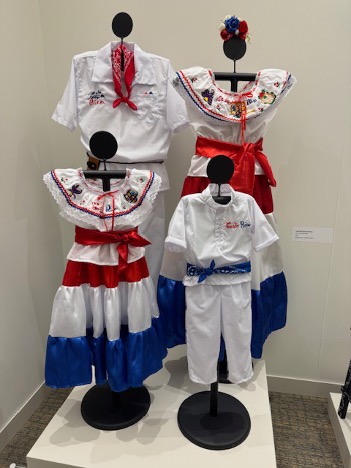 Costa Rican Dance Costumes
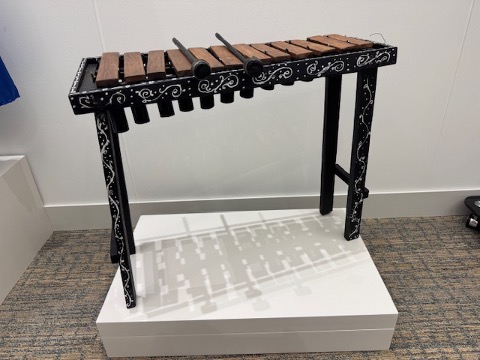 Marimba
The marimba was declared the national musical instrument in 1996. For centuries, it has provided a vibrant backdrop to life among the mestizo (mixed race), Afro-Costa Rican, and indigenous peoples of the country. November 30 is the National Day of the Costa Rican Marimba when festivals, competitions, and celebrations are held throughout the country.
In 2022, the Traditional Masquerades on October 31 were declared a national symbol. This tradition originated in the Central Valley of the country during the colonial period when communities organized festivals in honor of patron saints. Unique masks and costumes were created for these celebrations including the Gigante (giant) and Giganta (female giant) along with witches, devils, skulls, and even politicians and celebrities.
|
|
|
|
|
|
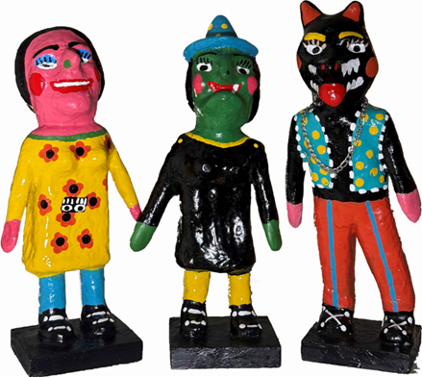 Miniature Figurines
 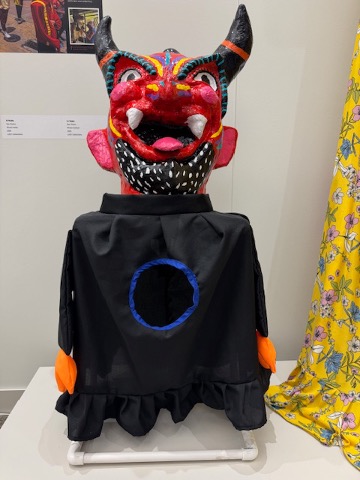 El Diablo (the devil)
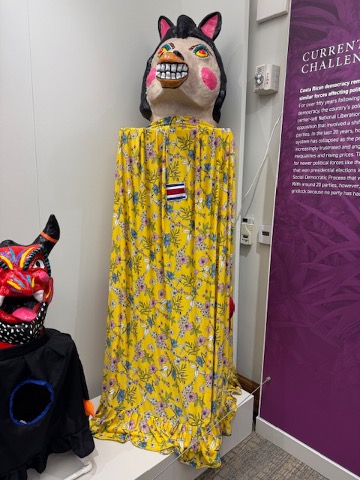 La Segua (a beautiful woman who seduces unfaithful men but transforms into a monster with a horse’s head for a skull)
Indigenous Peoples of Costa Rica
Costa Rica’s small remaining population of indigenous people now numbers about 114,000 people. The Indigenous Law that was passed in 1977 created a total of 24 indigenous territories located throughout the country. Indigenous people only were granted the right to vote in 1994 and they continue to struggle to maintain their territories and their rights. Surprisingly little is known about the eight indigenous groups—the Boruca, Bribri, Cabecar, Guaymís (or Ngabe), Huetar (or Quitirrisi), Maleku, Matambú (or Chorotega), and Térraba (or Teribe).
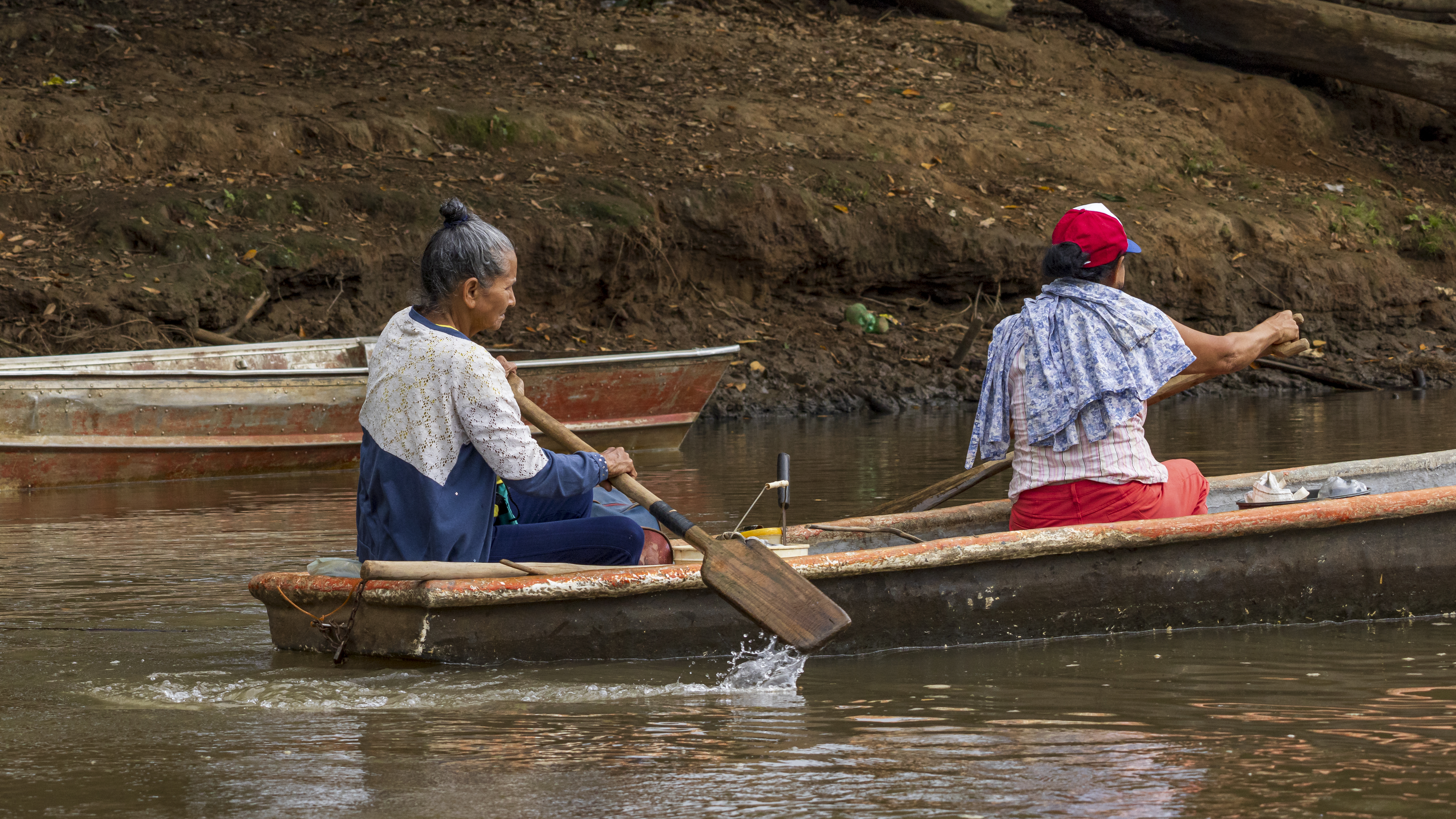 Photo: Hilda Weber Photo: Hilda WeberCano Negro Wildlife Refuge, Costa Rica -- March 10, 2024 Local Maleku people |
|
|
|
|
|
|
|
|
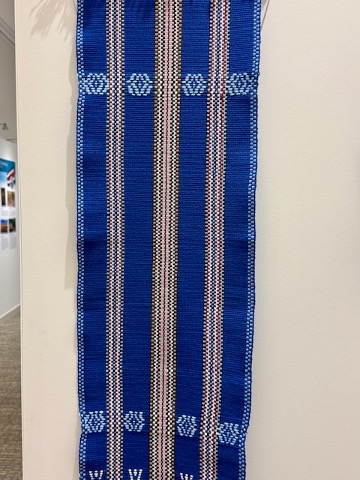 Woven Textile Woven TextileGrettel Moroto Cotton Brunca Boruca 2025 |
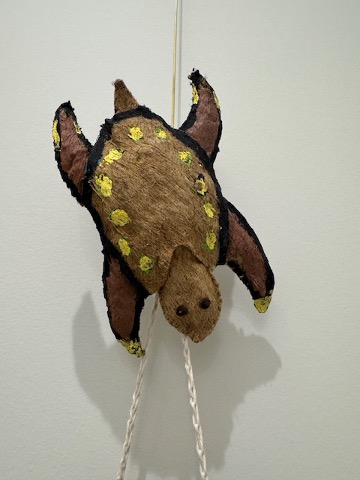 Animal Figure—Sea Turtle
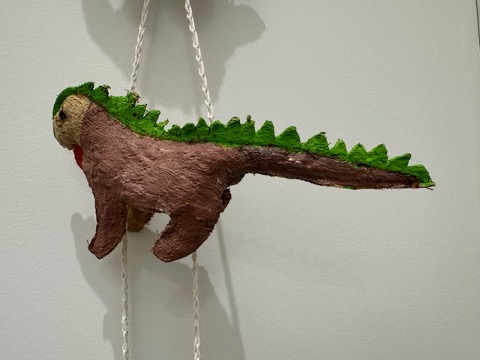 Animal Figure—Iguana
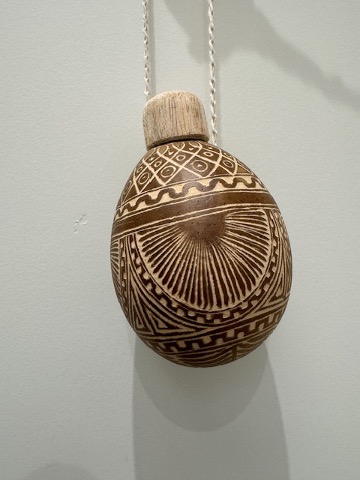 Carved Gourd
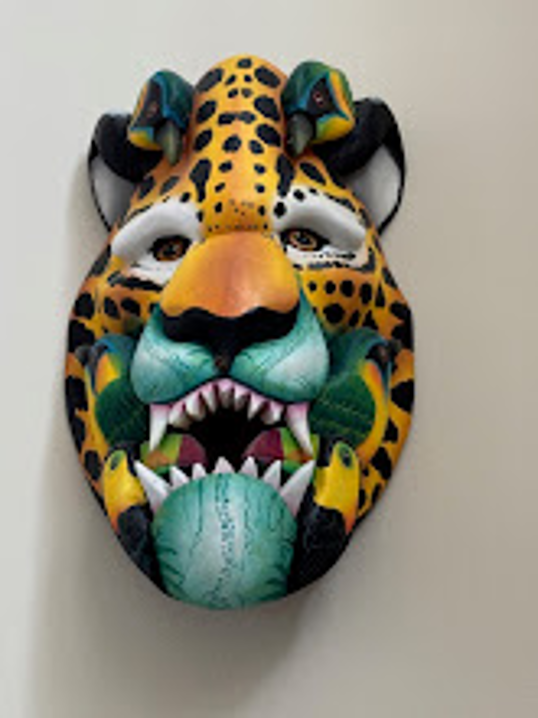 Boruca Mask