



Environment
Costa Rica and the environment
Costa Rica’s incredible biodiversity results from the many habitats that are contained in this small country. Tropical rainforests, cloud forests, tropical dry forests, mangroves, montane grasslands, and shrublands each support unique plant and animal life. Leslie Holdridge provided an important classification of these life zones in 1971 based on the major variables of temperature, humidity, and elevation, identifying twelve major life zones and twelve transition zones.
Costa Rica is one of the major biodiversity hotspots in the world, harboring a huge number of species, some of which can be found nowhere else on earth. Although it covers just .03% of the world’s landmass, it is estimated that about 6% of the world’s known species find a home there.
|
Photo by Bob Hilscher |
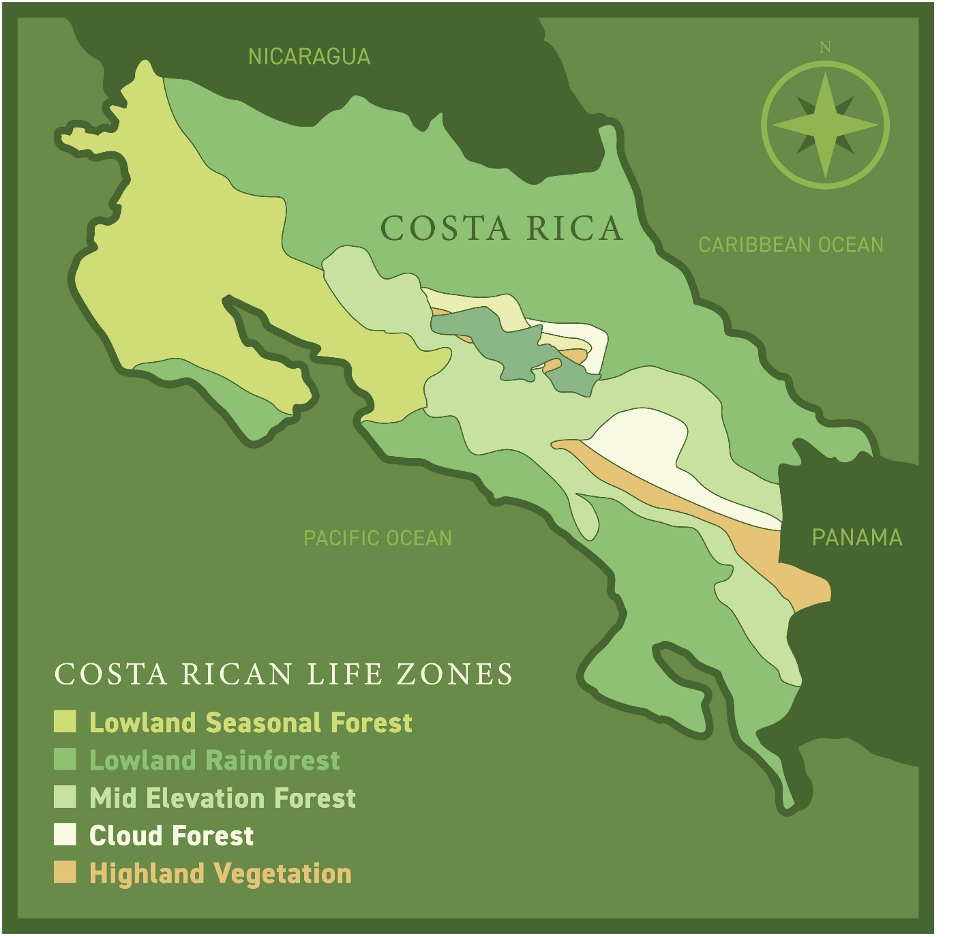
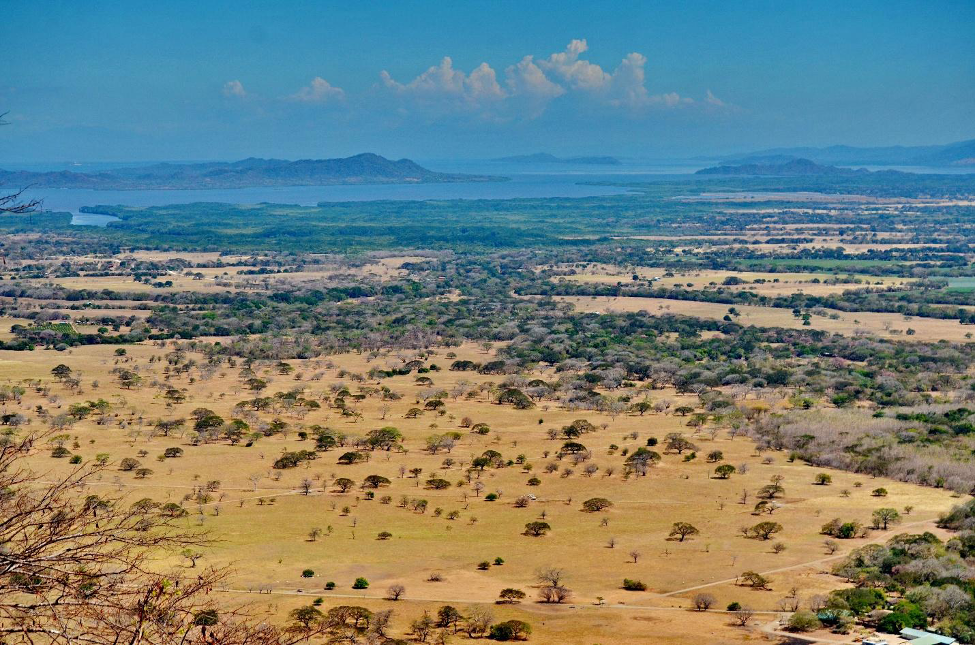
The Lowland Seasonal Forest is found in many parts of the central valley but mainly across the Northwest Pacific Coast.
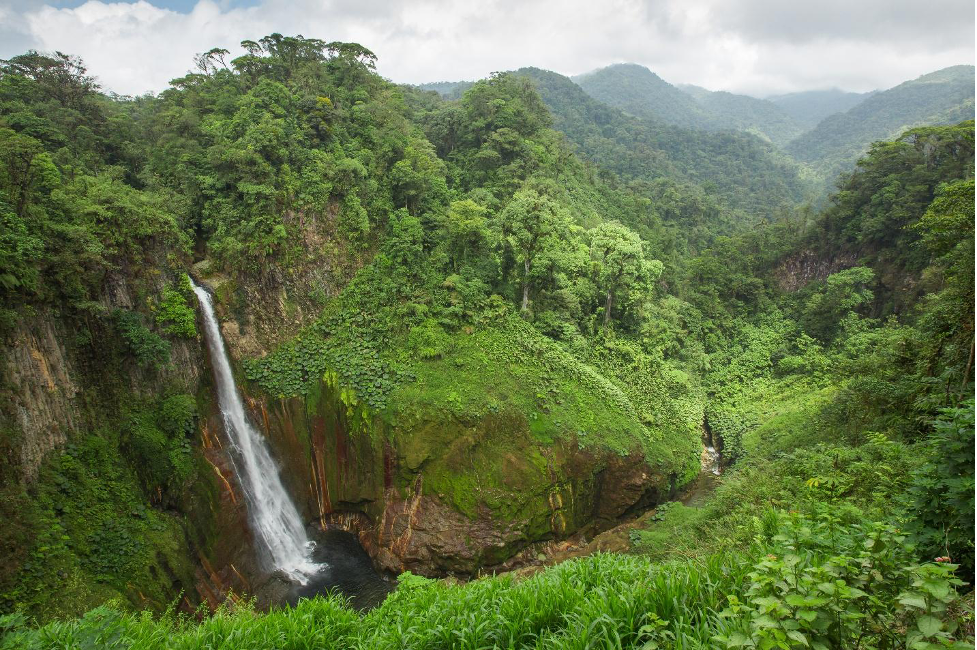 Photo by Ivalin Photo by Ivalin |
As you approach 500-1500 meters in altitude you in most cases enter the Middle-Elevation Forest.
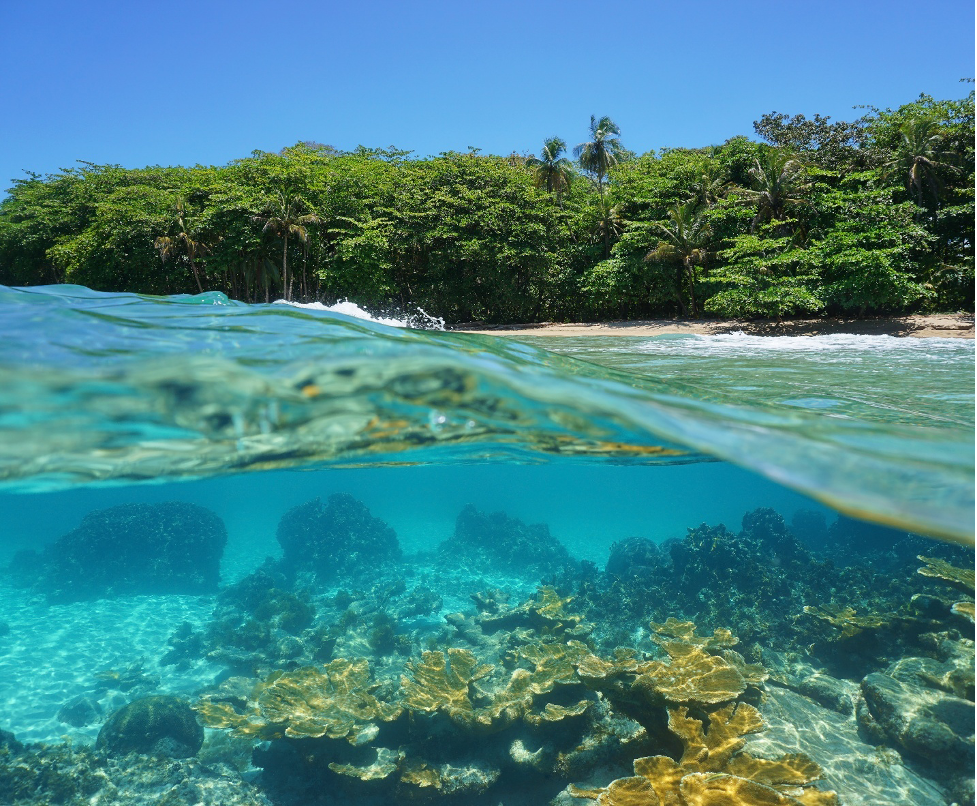 |
There are also other ecosystems in Costa Rica not included in the life zones categorization, such as the Coral Reefs or the Mangroves.
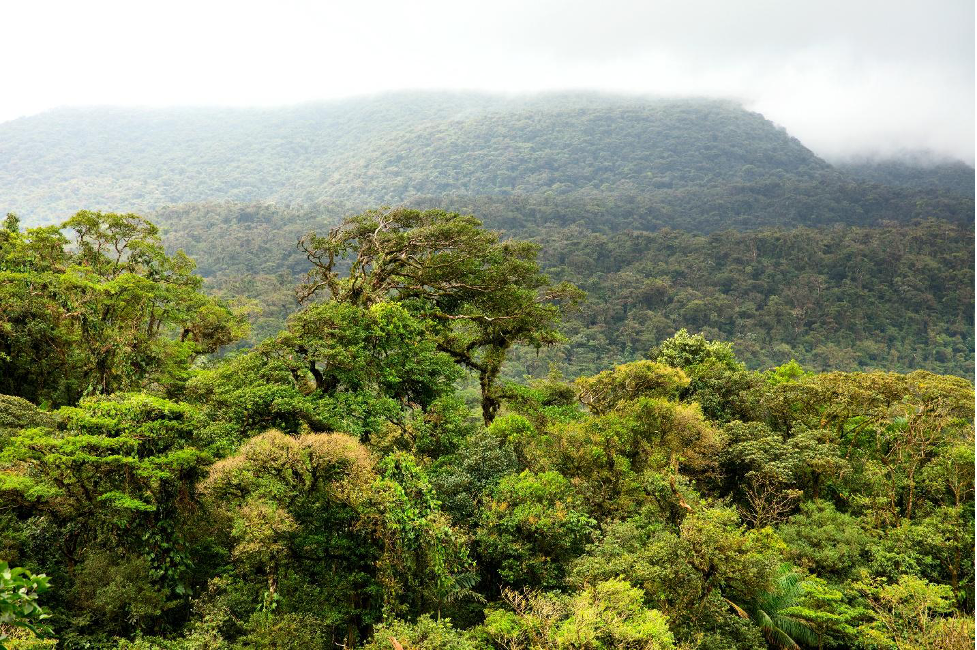 Photo by chuvipro Photo by chuvipro |
Above 1500 meters you get into the Highland and Cloud Forest Ecosystems of Costa Rica.
Christiana Figueres Olsen
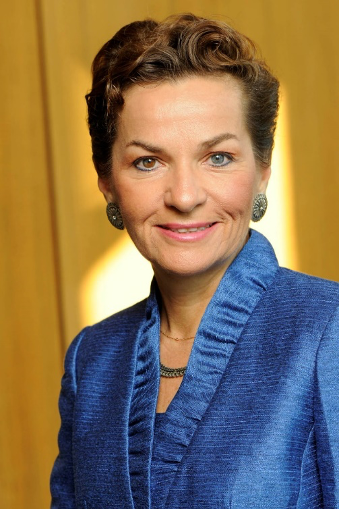
Befitting the country’s commitment, one of the most prominent leaders in the worldwide environmental movement has been Christiana Figueres Olsen. She is the daughter of national hero and former president José Figueres Ferrer. Trained as a social anthropologist, she has led a variety of national, international and multilateral policy negotiations. As Executive Secretary of the UN Framework Convention on Climate Change from 2010-2016, she was able to bring the world’s nations together to achieve the historic 2015 Paris Agreement on combatting climate change.
 Christiana Figueres Christiana Figueres |
Costa Rican diplomat Christiana Figueres, former Executive Secretary of the UN Framework Convention on Climate Change.
National Parks
Costa Rica is a global leader in conservation and ecotourism. The country has designated 27% of its land as protective parks and reserves and, in early 2019, the country announced the launch of an ambitious project to achieve zero net carbon emissions by the year 2050.
Costa Rica has created one of the most extensive national park and protected areas systems of any country in the world. Beginning in the 1960s, the system has grown to 186 protected areas including 27 national parks as well as biological, forest, and wildlife reserves and other protected zones. In addition to land-based protected areas, in 2021 the country expanded its protected ocean areas to more than 30 percent of its territorial waters.
Environmental Conservation
Corcovado National Park which protects the Osa Peninsula in southwestern Costa Rica, is one of the most biologically diverse places on the planet. More than 500 species of trees, 400 species of birds, 140 species of mammals, and 116 species of amphibians and reptiles live in the park.
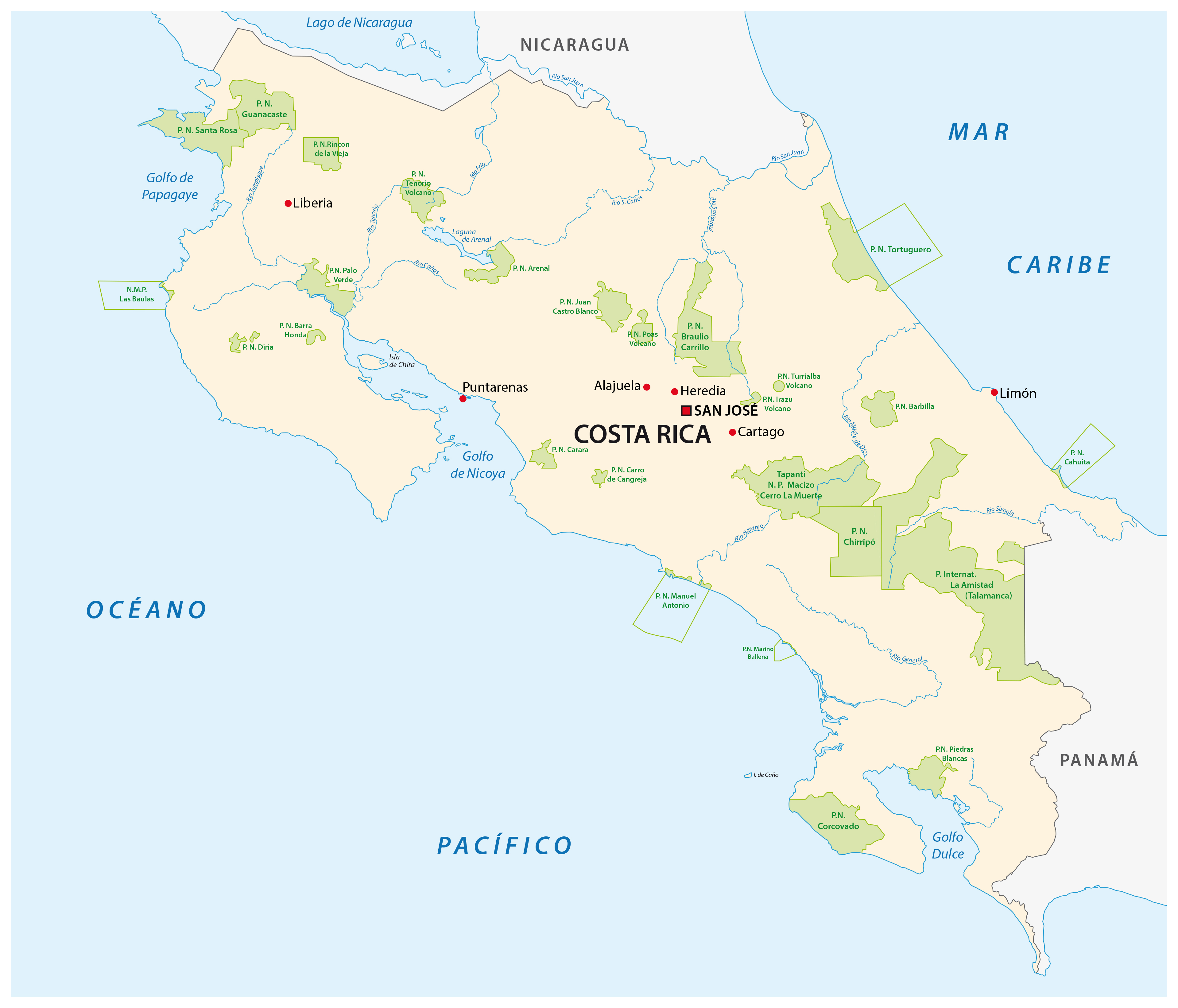
In addition to national protected areas, hundreds of privately owned reserves have been created. Many of these were established to cater to ecotourists attracted to the unspoiled nature of many areas of the country. Some of the most well-known and internationally visited areas are in and around the Monteverde Cloud Forest Reserve. Founded in 1962, the reserve belongs to The Tropical Science Center, a non-governmental scientific, educational and research organization.
Another private reserve in the same area is the Bosque Eterno de los Ninos (Children’s Eternal Rainforest), the largest reserve in the country at over 2,300 square kilometers. More than 70,000 visitors a year are attracted by the activities in and around these private reserves.
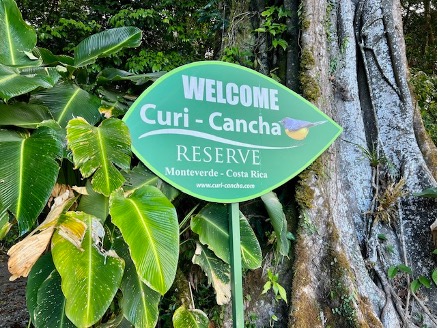 Entrance to one of the private reserves in the Monteverde Cloud Forest. Photo by Bill DeWalt, 2023.
Biodiversity and Currency
Costa Rica celebrates its biological diversity alongside its distinguished historical figures on its banknotes and coins. Plants and animals from the dry tropical forests, coral reefs, mangroves, tropical rainforests, and cloud forests are portrayed on the currency bills while butterflies, sea turtles, and tree fogs appear on its coins.
People and Wildlife on the banknotes
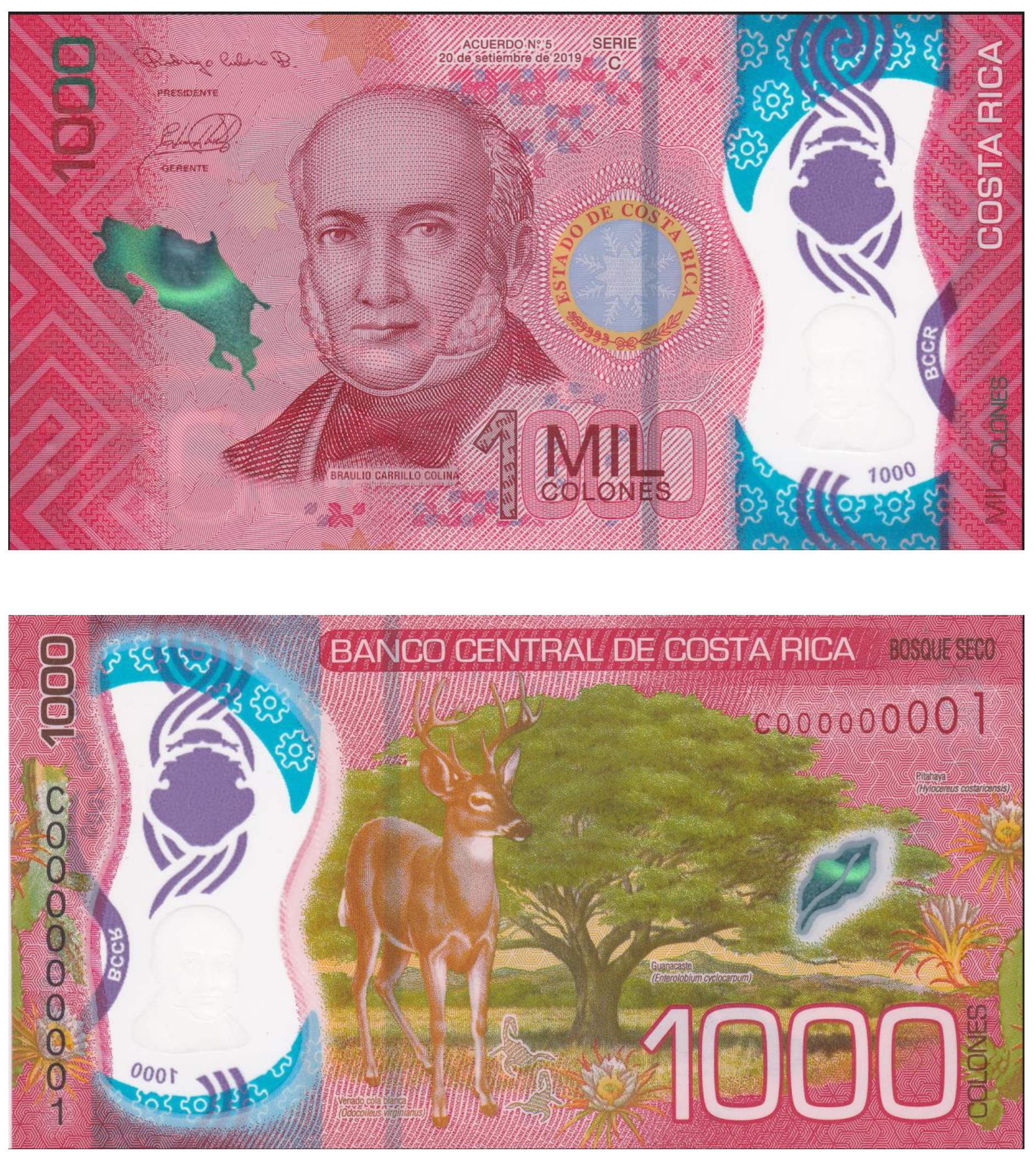
1000 Colones
Braulio Carrillo Colina (1800-1845) – Head of state twice, promoted the cultivation of coffee
Tropical Dry Forest with White-Tailed Deer (Odocoileus virginianus), Dragon Fruit (Hylocereus costaricensis), Guanacaste (Enterolobium cyclocarpum)
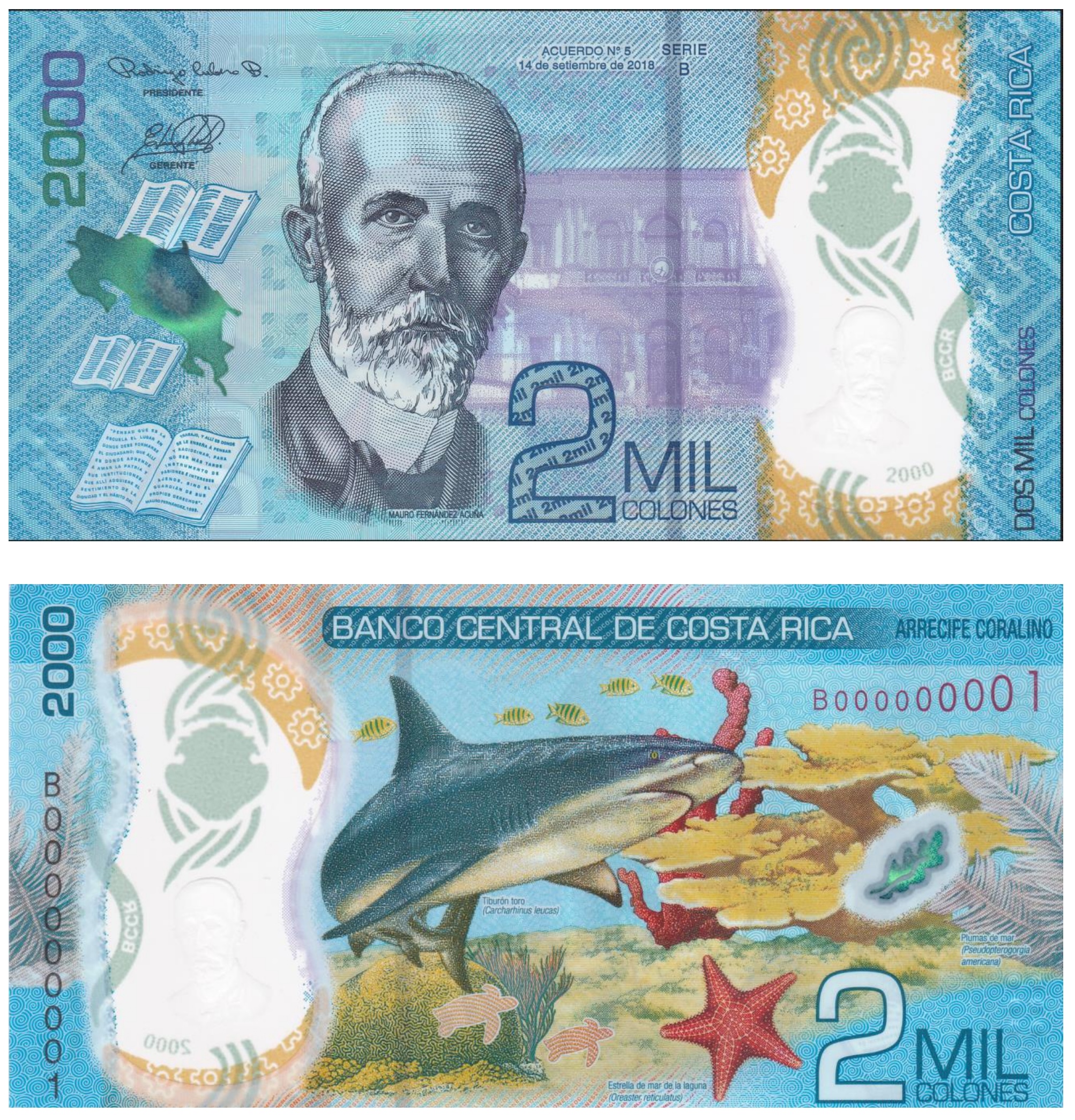
2000 Colones
Mauro Fernández Acuña ((1845-1905) – Author of late 19th century educational reforms democratizing education
Coral Reef with Bull Shark (Carcharhinus luecas), Lagoon Starfish (Oreaster reticulatus), and Sea Feathers (Pseudopterogorgia americana)
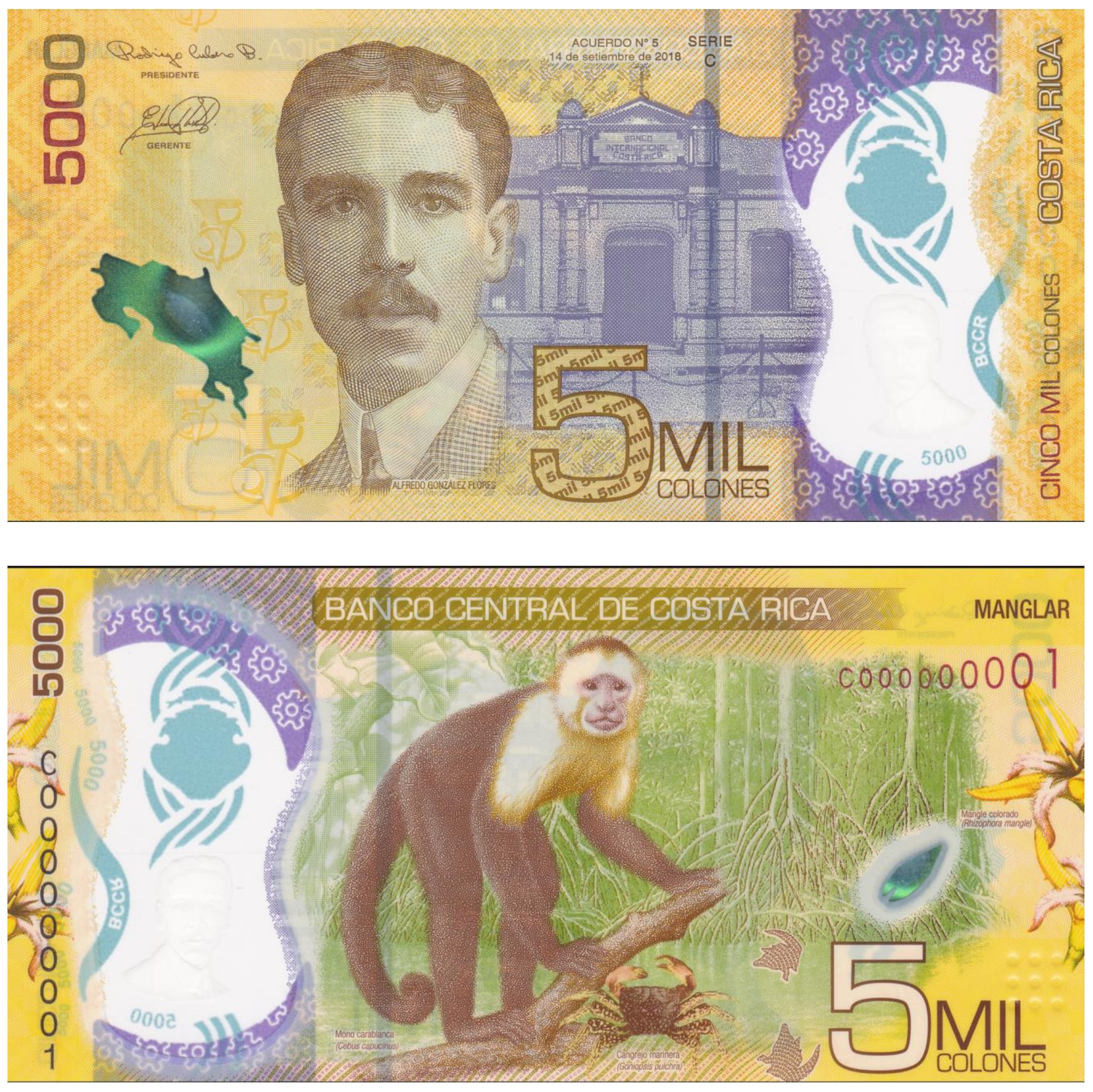
5000 Colones
Alfredo González Flores (1877-1962) – President, created what became the National Bank of Costa Rica, established the basis of the tax system
Mangroves with White-faced Monkey (Cebus capucinus), Sailor Crab (Goniopsis pulchra), and Red Mangrove (Rhizophora mangle)
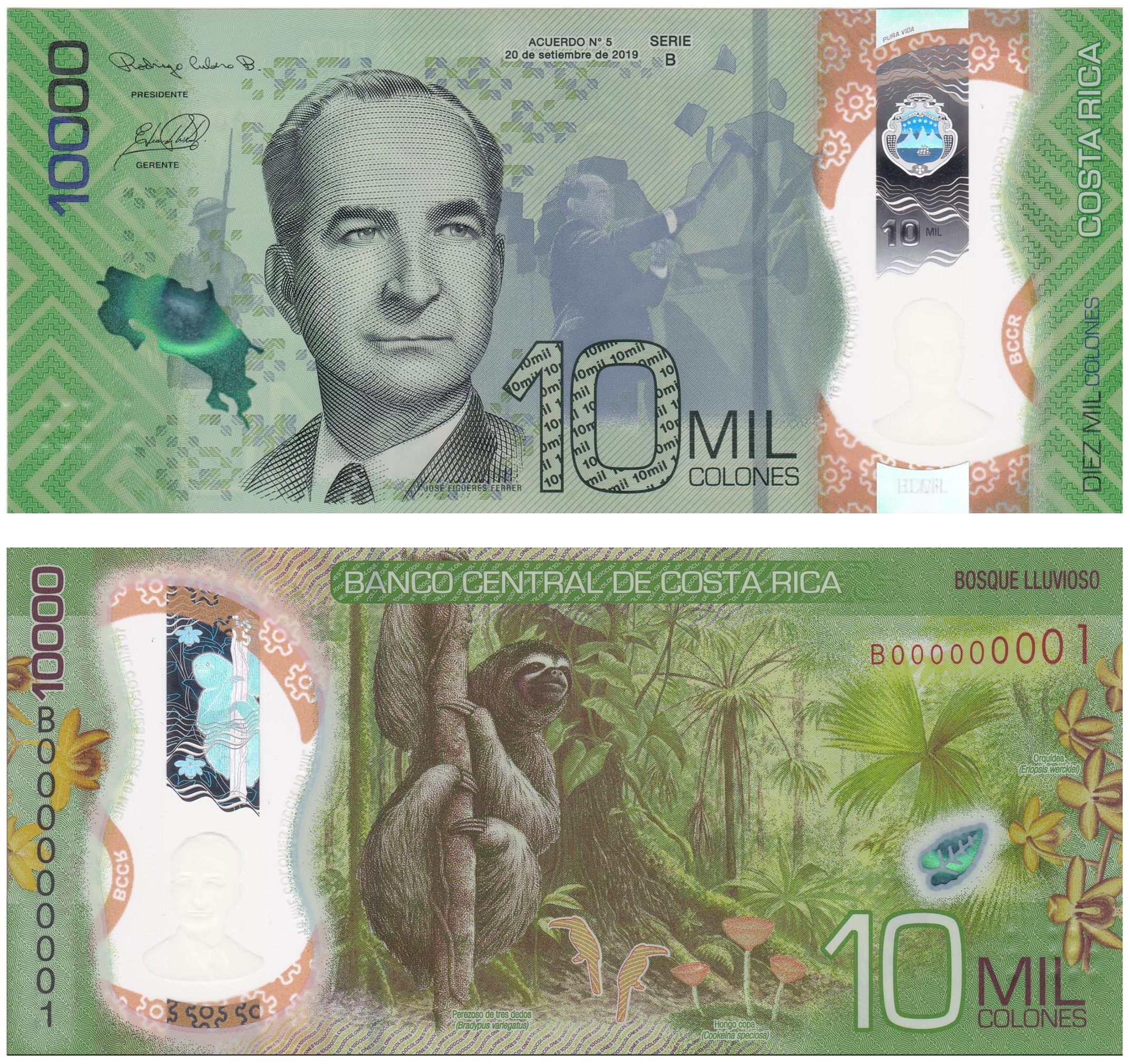
10,000 Colones
José Figueres Ferrer (1906-1990) –President three times, abolished the army
Rainforest with Three-toed Sloth (Bradypus variegatus), Wineglass Mushroom (Cookeina speciosa), and Orchid (Eriopsis wercklei)
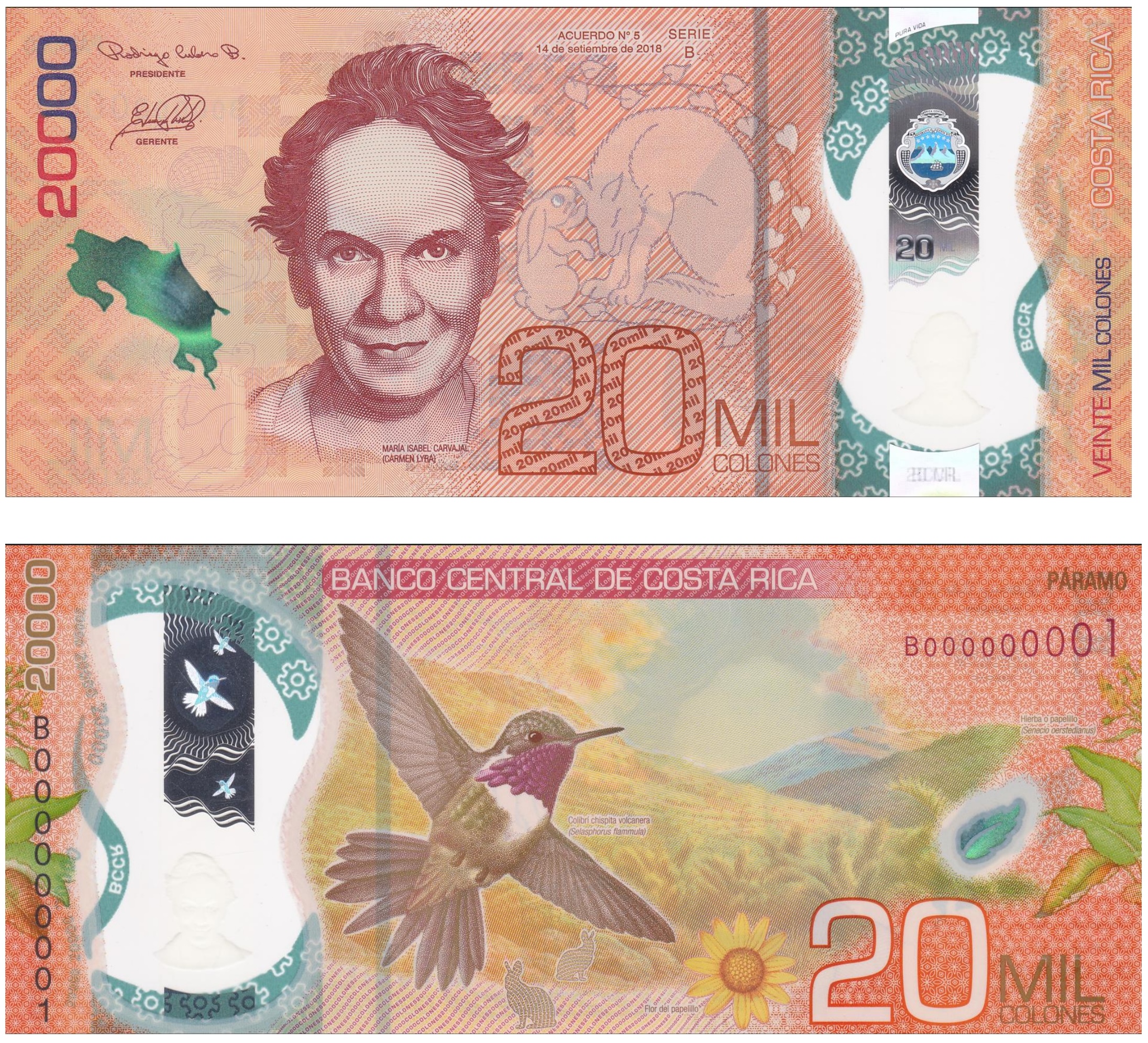
20,000 Colones
María Isabel Carvajal [pseudonym Carmen Lyra] (1887-1949) – Writer, founder of country’s first Montessori school, co-founder of Communist party, and of one of the country's first female workers unions Alpine tundra (Páramo) with Volcano Hummingbird (Selasphorus flammula) and Aster (Senecio oerstedianus) with flower highlighted
Coins
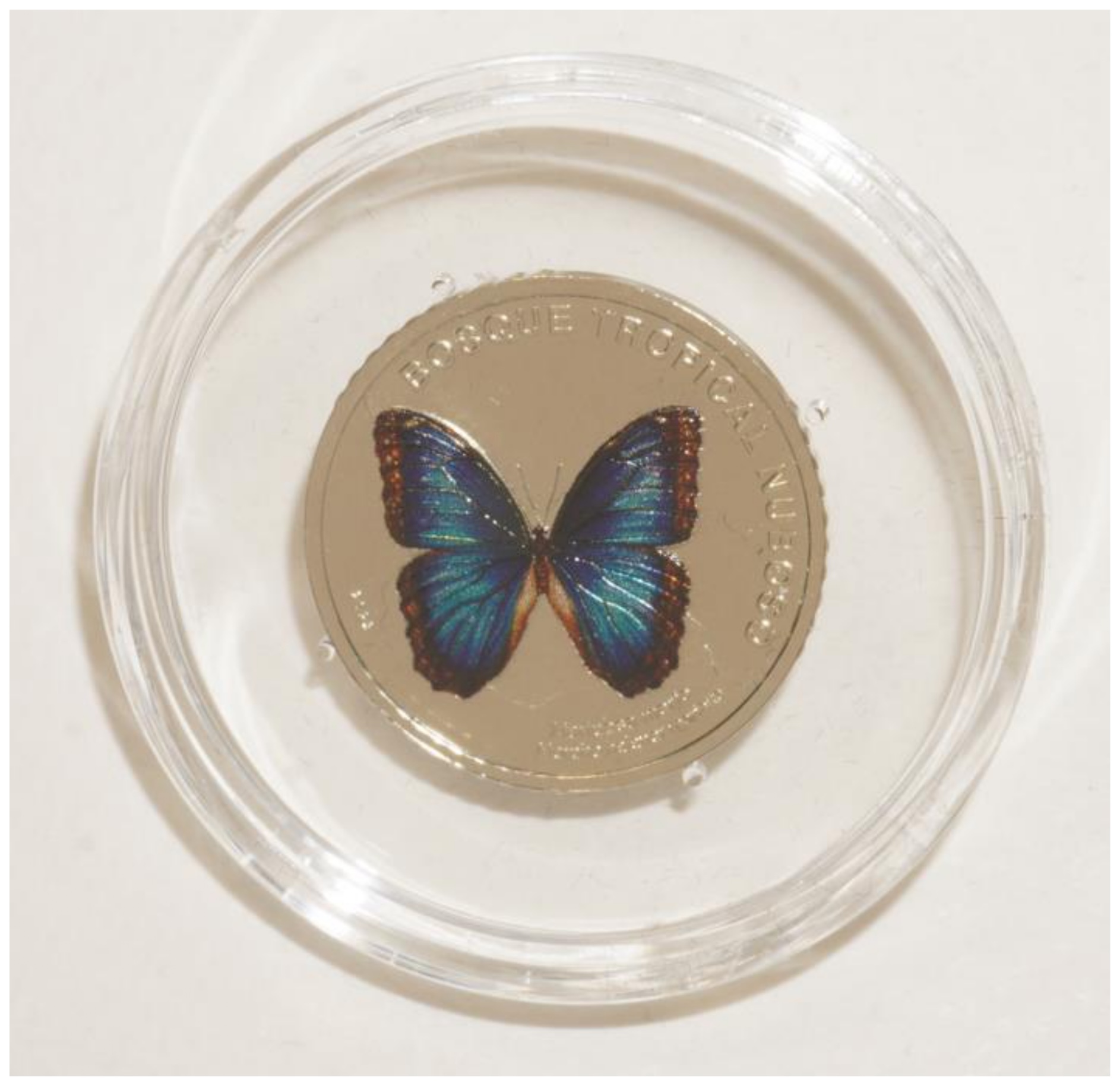
50 Colones
Morpho (genus) butterfly representing the Cloud Forest
Nickel Alloy with Brass
2023
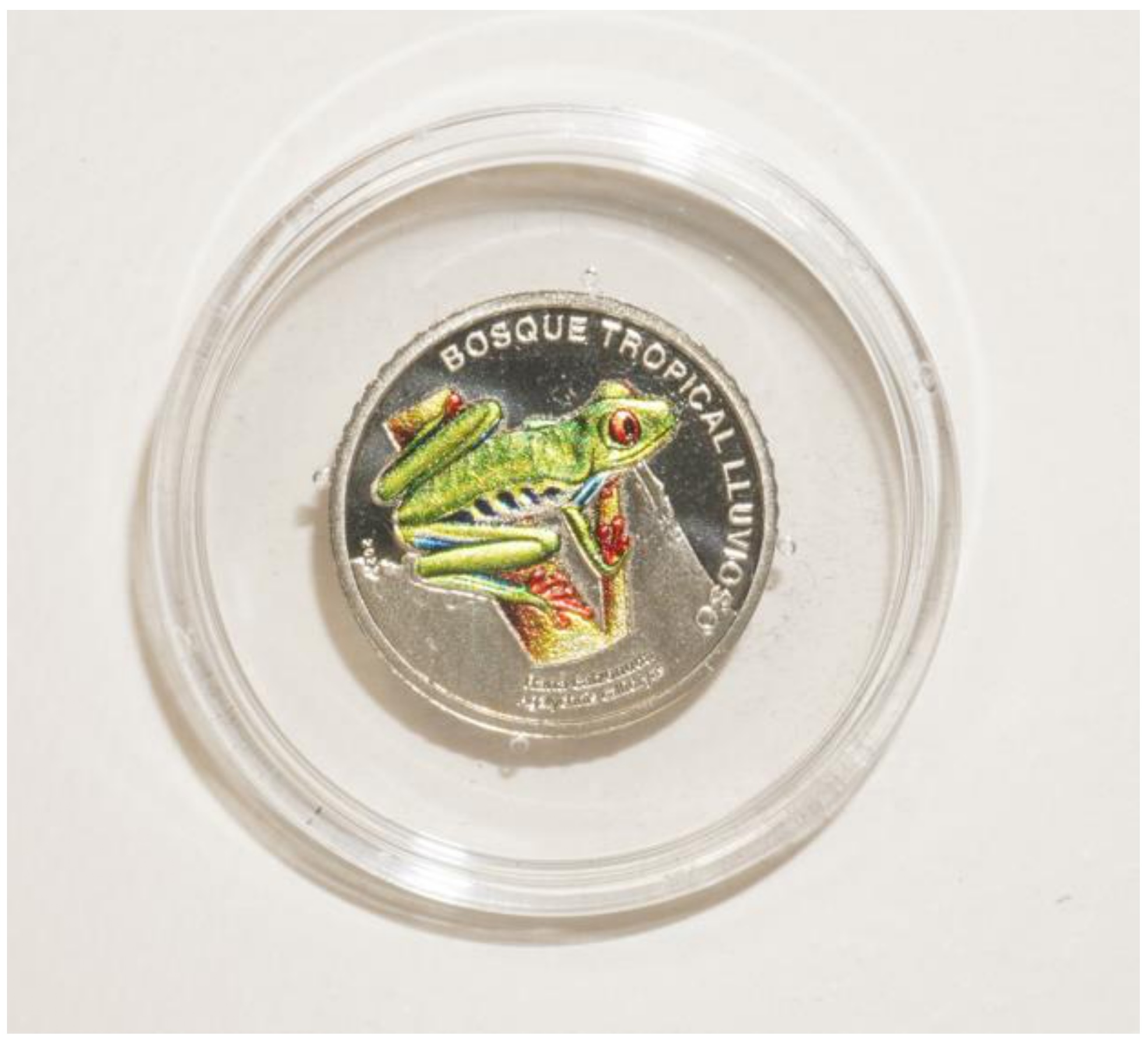
50 Colones
Red-eyed Tree Frog (Agalychnis callidryas) representing the Lowland Tropical Rainforest
Nickel Alloy with Brass
2023
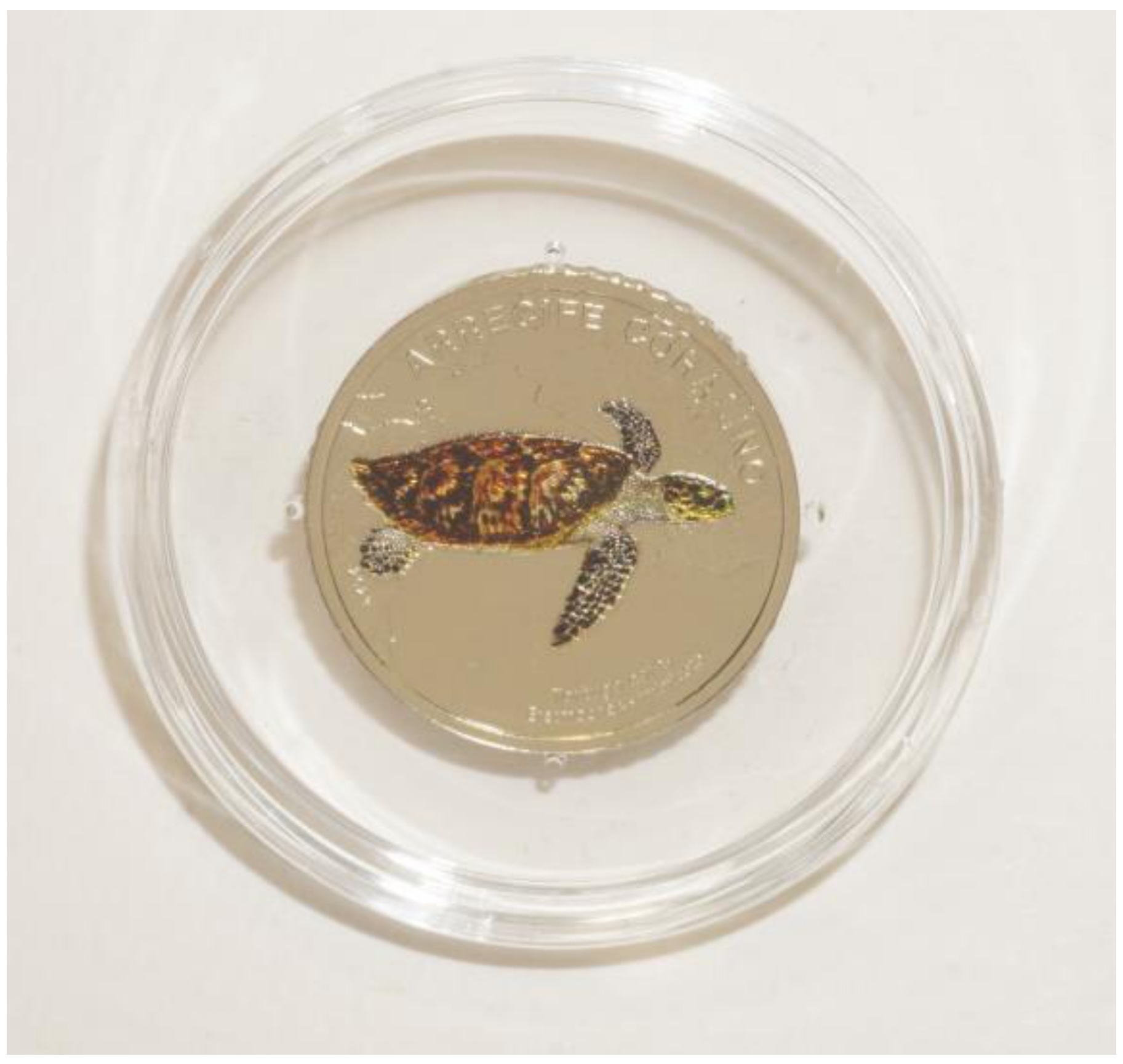
50 Colones
Hawksbill Sea Turtle (Eretmochelys imbricata) representing the Coral Reef
Nickel Alloy with Brass
2023
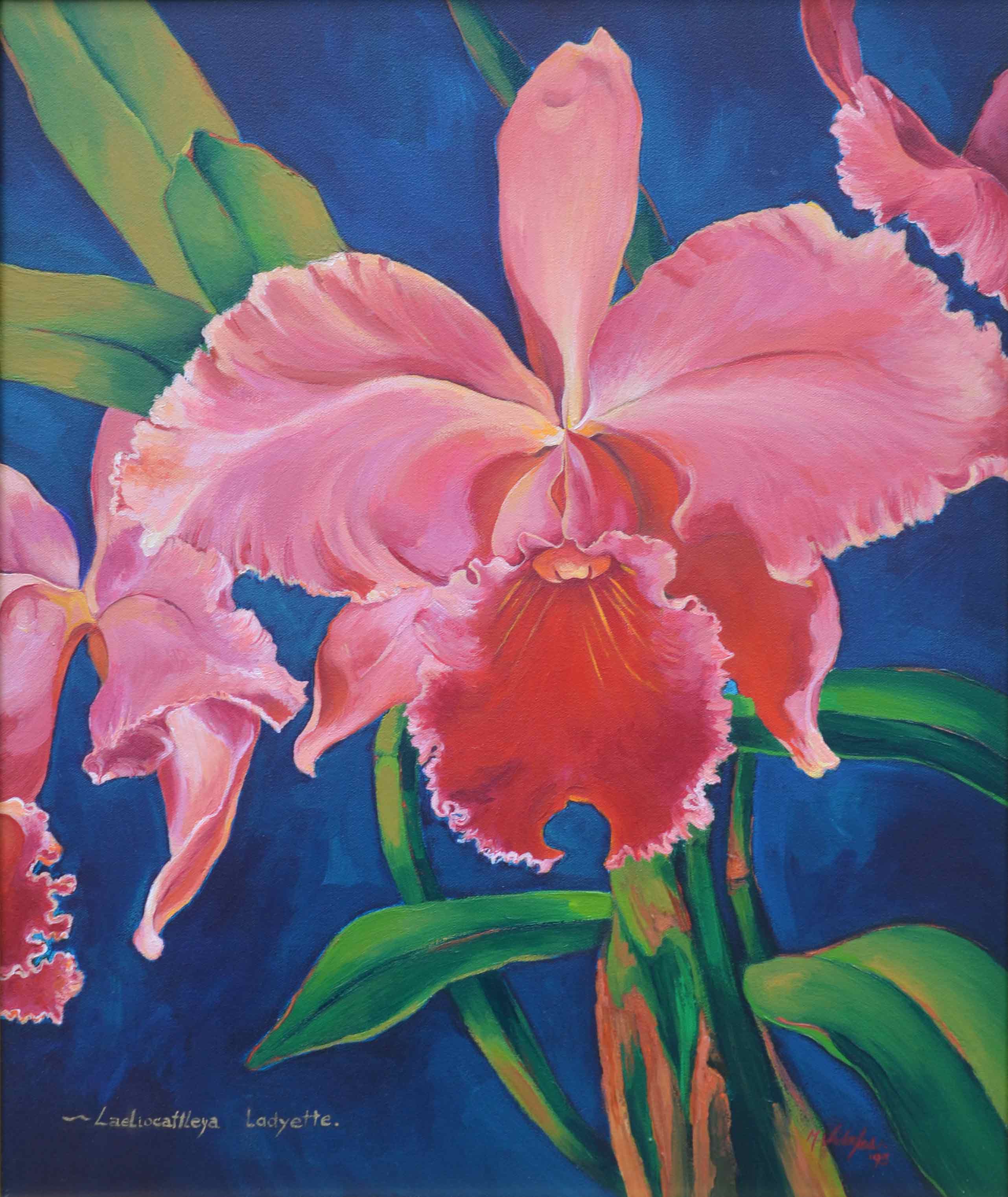
Laeliocattleya
Marité Vidales
1995
Acrylic on Canvas
On Loan from Marité Vidales
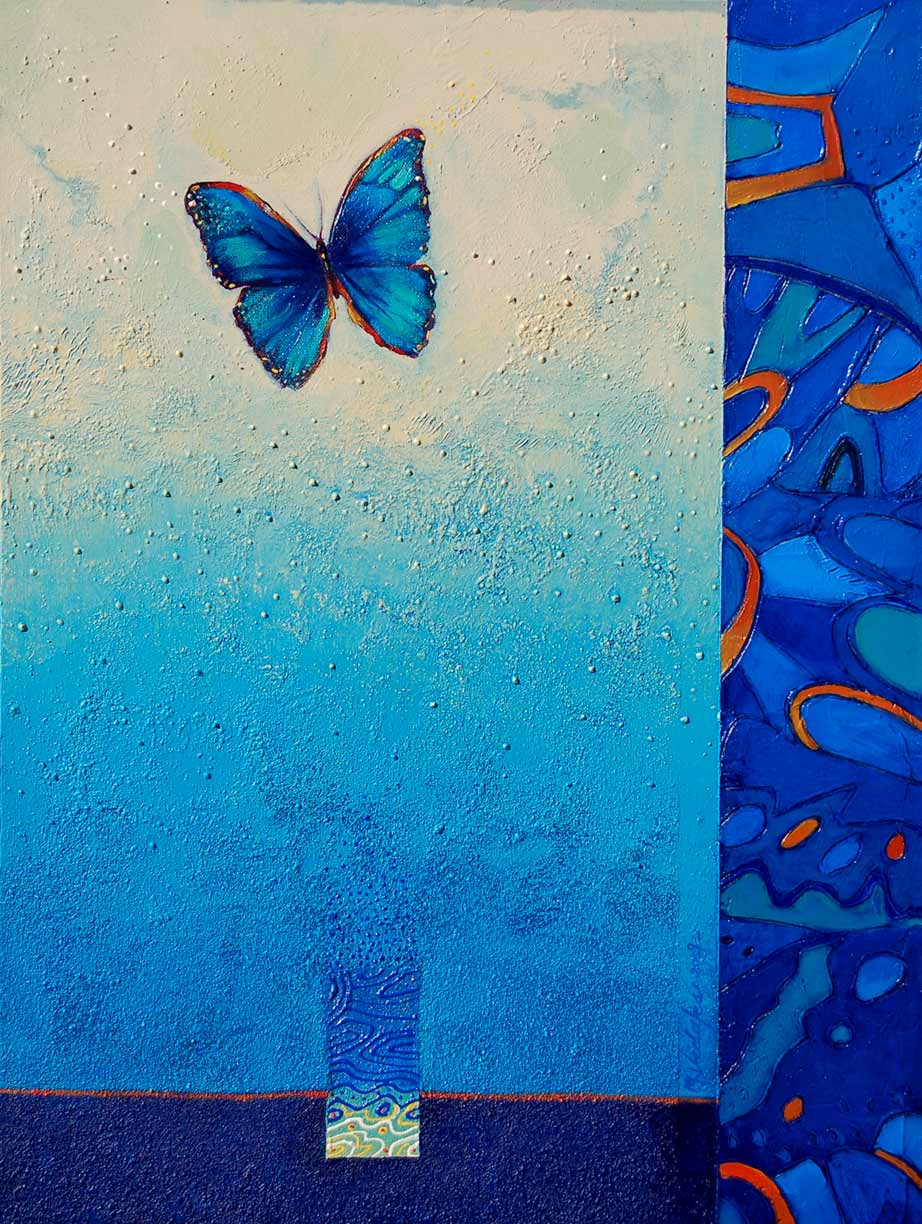
Morpho (Butterfly Effect Series)
Marité Vidales
2009
Acrylic on Canvas
On Loan from Marité Vidales