



Geology and Landbridge
Geological Forces
Until 50 million years ago, the land we now know as Costa Rica was part of the ocean floor and there was no connection between the continents of North and South America. Over time, two parts of the earth’s crust—The Caribbean Plate and the Cocos Plate—continued pressing into one another The rocks of the Cocos Plate are being pushed downward with the pressure heating them and turning them into molten rock. This pressure buildup becomes so great that lava and steam are pushed upward forming volcanoes. Although the earliest volcanoes were beneath the ocean’s surface, eventually they emerged, and a series of volcanic islands were created. It was not until about three million years ago that these volcanoes formed the continuous land bridge between North and South America.
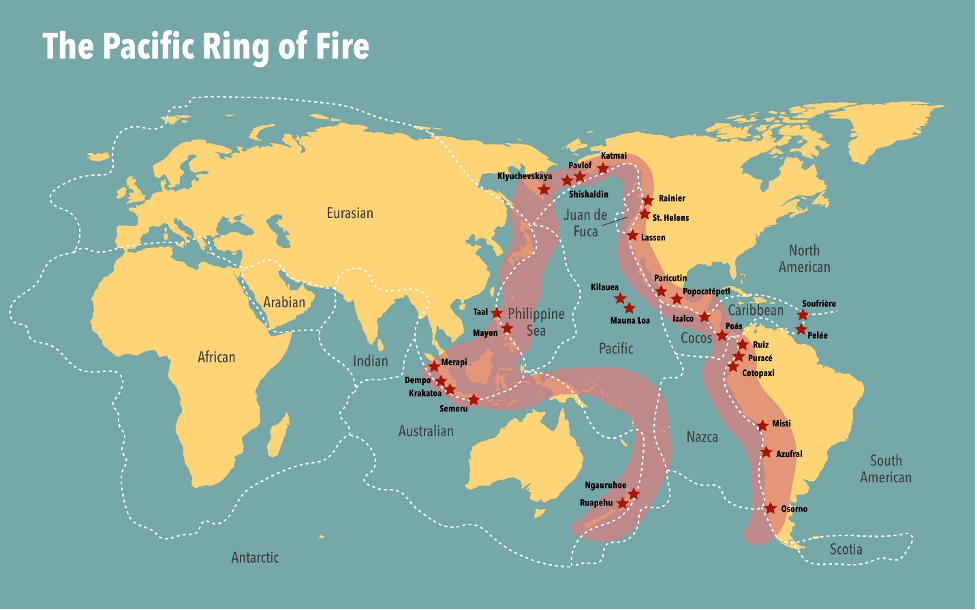
Costa Rica is part of the so-called Ring of Fire that stretches around the Pacific rim from New Zealand, through Japan, across the Bering Strait, along the west coast of North America to the southern tip of South America. The “fire” refers to the many volcanoes in this active geological zone. Costa Rica has more than 200 active, dormant, and extinct volcanoes. Small earthquakes occur on a daily basis, with major quakes occurring once every ten years or so.
 |
 Credit: CelsoDiniz Credit: CelsoDiniz |
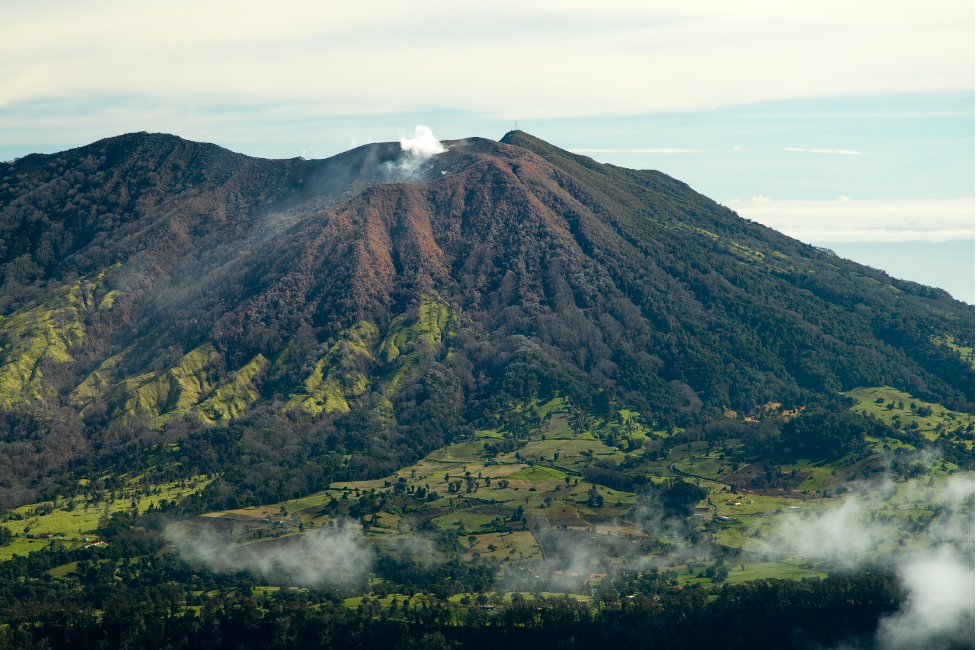
Turrialba
Active Volcano in Costa Rica
|
Photo by 35007 |
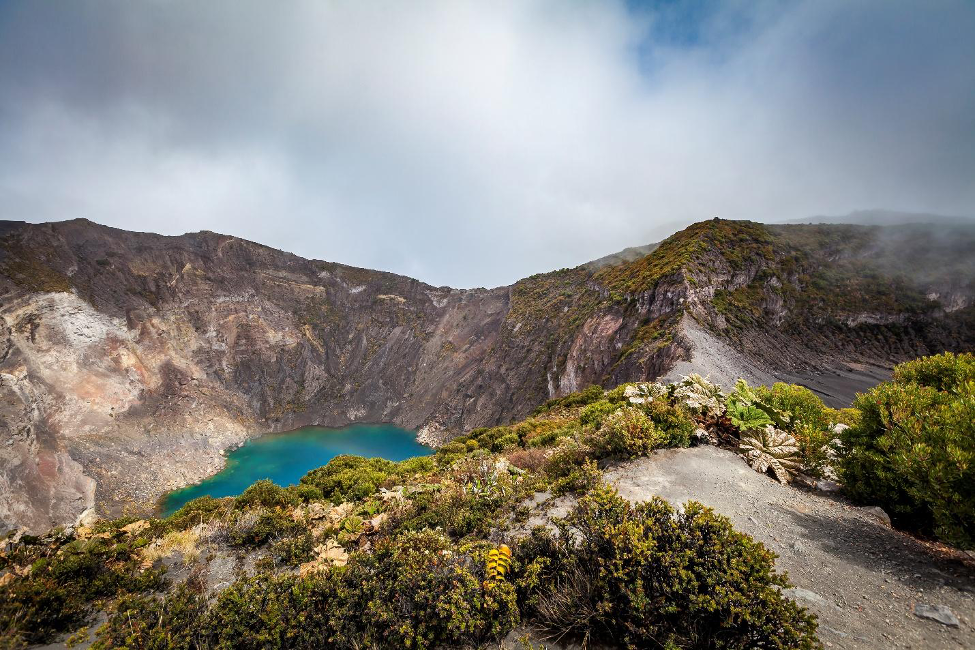
Volcán Irazú
Blue chemical sulphur water at the volcano crater lake of Irazú volcano in Costa Rica at 3200 meters above sea level.
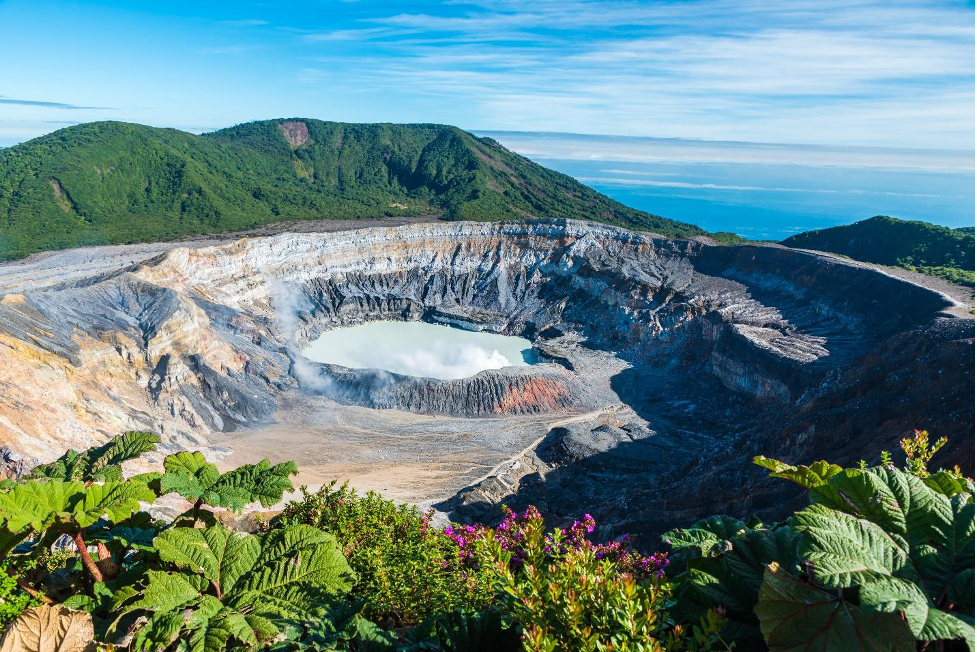 Credit: SimonDannhauer Credit: SimonDannhauer |
Poás Volcano in north-central Costa Rica with a crater lake in the center.
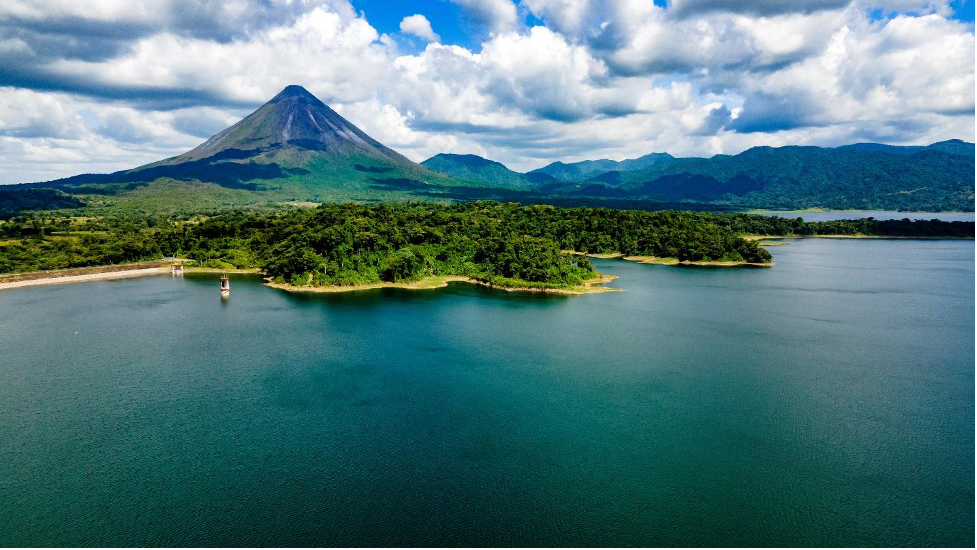 Credit: OGPhoto Credit: OGPhoto |
Arenal Volcano National Park with Arenal Lake surrounded by lush tropical rainforest.
Artist Marité Vidales’ Biography
Marité Vidales is a Costa Rican-born Washington, D.C.-based painter with a career that spans over 30 years. She received her BFA from the School of Fine Arts at the Universidad de Costa Rica in 1987 and completed Graphic Design studies at the Universidad de Centro America in 1983. She has exhibited widely in the United States, Germany, Perú, and Costa Rica. She maintains an active studio practice in the Shaw Neighborhood in Washington and teaches art at two non-profit senior centers in the city. She states: ‘Painting is my life, my occupation, and my greatest satisfaction. I use symbols to communicate the content of my work. Through colors and textures, I strive to create a harmonious and balanced image. My painting styles range from figuration to geometric abstraction. I develop thematic series of work based on my life experiences as a Costa Rican immigrant to the United States, as well as my travels and social concerns.” For more information visit: www.maritevidales.com
|
|
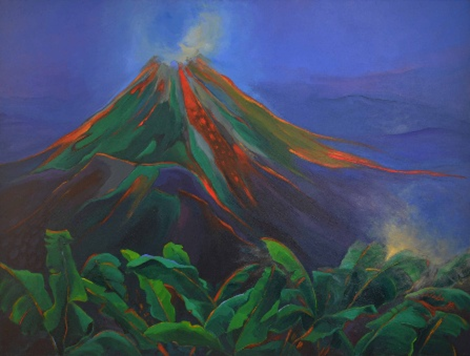
Arenal Volcano
Marité Vidales
Costa Rica
1995
Acrylic on Canvas
On Loan from Marité Vidales
The Land Bridge
The land bridge opened a pathway for plants, insects, and animals from the two continents to settle in or pass through the new lands created by the volcanoes. The incredible biodiversity of Costa Rica and Central America is partially due to this mixing of flora and fauna from two continents. The ruggedness of the terrain from these relatively new lands also created protected habitats in which biodiversity could flourish.
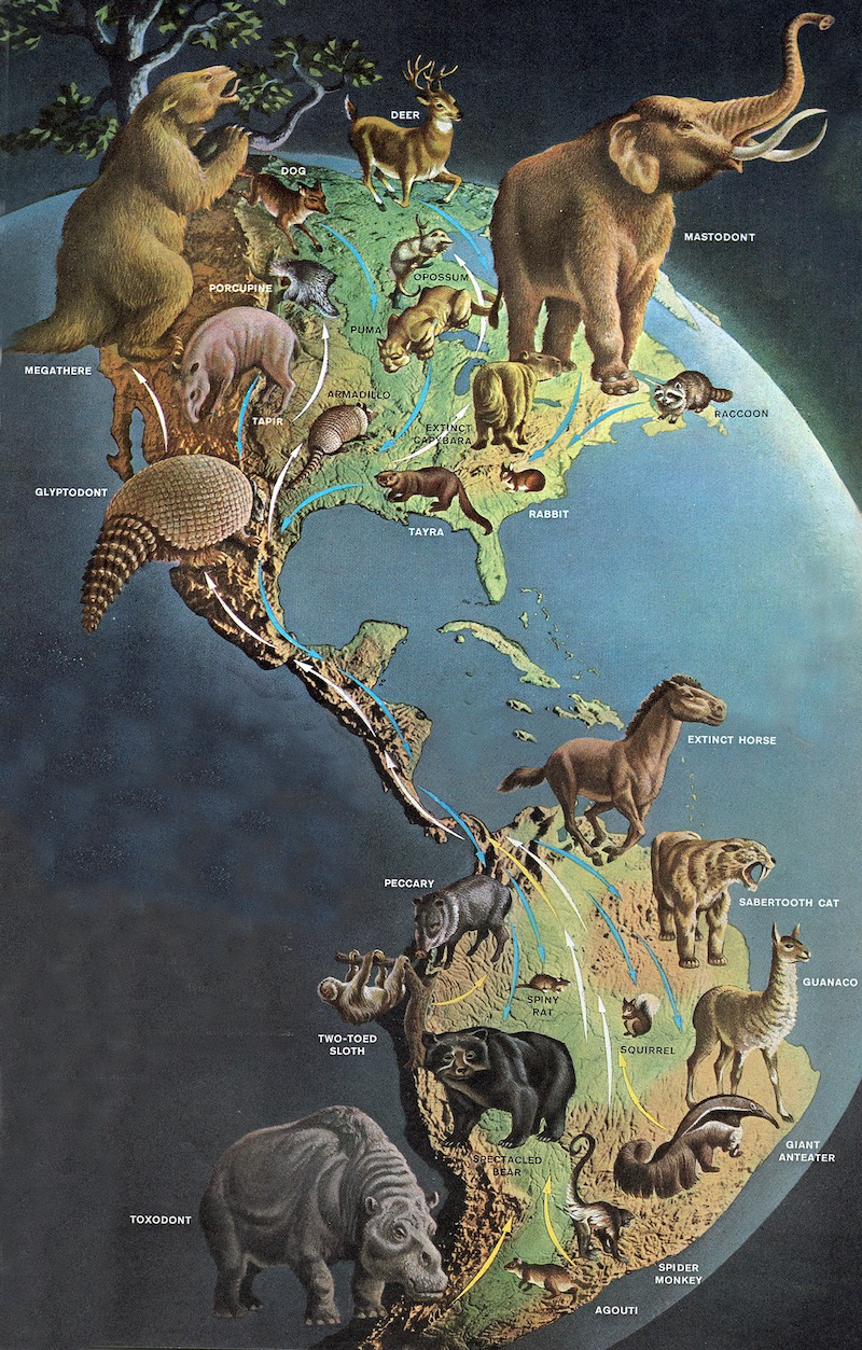 Animals migrating on the land bridge Animals migrating on the land bridge |
This diagram shows some of the animals that migrated northward after the formation of the land bridge, leading to extensive biodiversity.
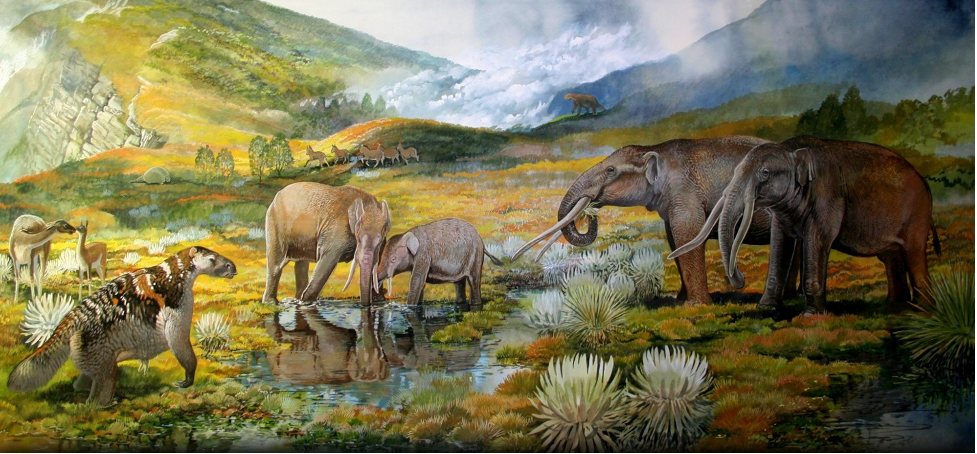 Mural of Peter Schouter Mural of Peter Schouter |
 Credit: David Credit: David |
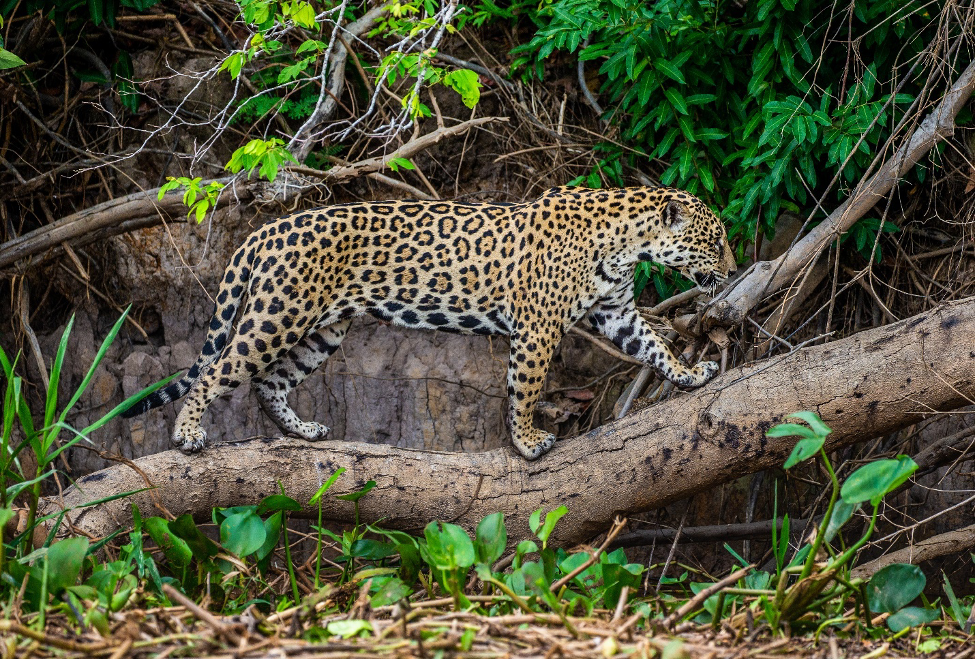
Jaguar
While once more widespread, Jaguar populations have declined because of poaching and loss of habitat. Conservation efforts like protected areas and collaborative environmental projects are working to safeguard these beautiful creatures.
 Credit: Mark Kostich Credit: Mark Kostich |
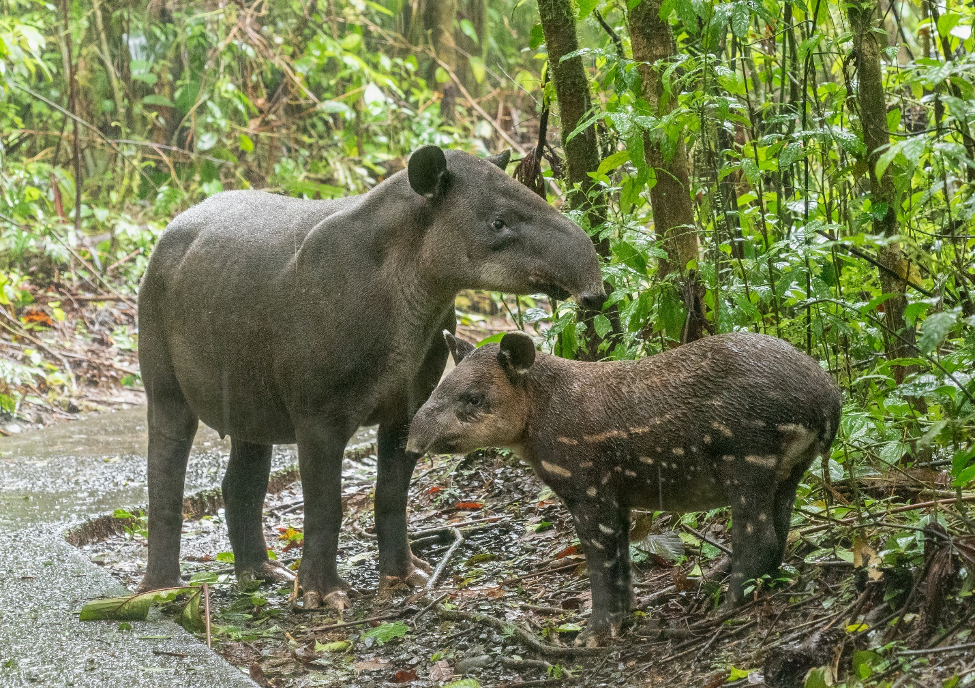
Tapirs - referred to as “Gardeners of the Forest”- play a crucial role in maintaining the health and biodiversity of Costa Rican rainforests by dispersing seeds through their diet and movement through the forest.
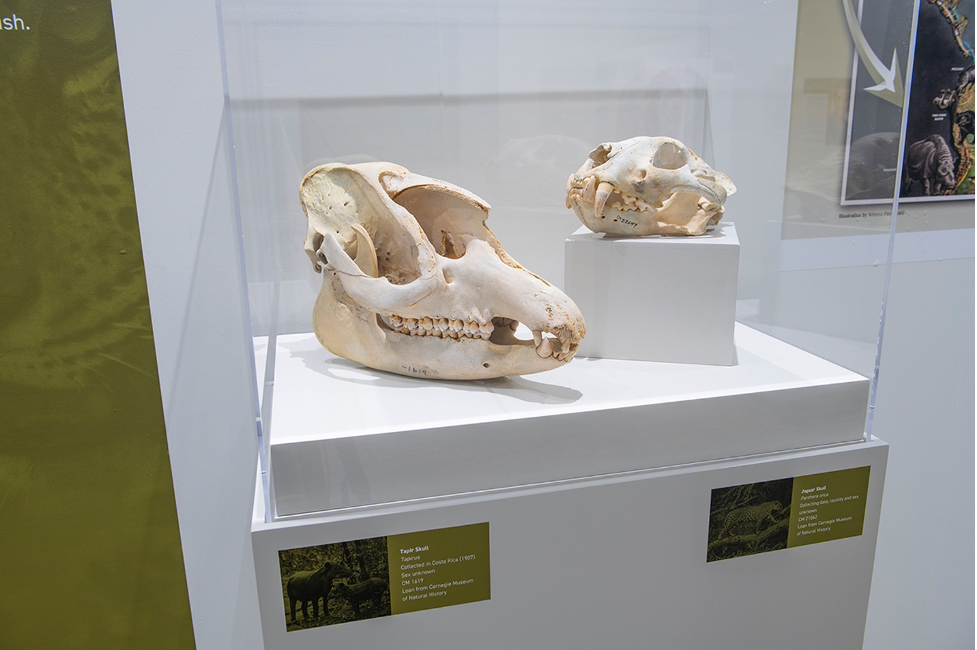 |
Tapir Skull- left
Tapirus terrestris
Collected in Costa Rica (1907)
Sex unknown
CM 1619
Loan from Carnegie Museum of Natural History
Jaguar Skull - right
Panthera onca
Collecting date, locality and sex unknown
CM 21062
Loan from Carnegie Museum of Natural History